Whidbey Island Music Festival Turns Twenty
by Russell Clepper • Photos by Dennis Browne
Nearly two decades ago in November 2005, Tekla Cunningham found herself at her aunt’s home in Greenbank for Thanksgiving. It was a trip she and her family often made during holidays and summer vacations. However, this visit would prove to be momentous for her, and for the cultural landscape of Whidbey Island.
Cunningham is one of the Pacific Northwest’s finest musicians—highly accomplished as a violinist in her chosen genre. She has had a life-long love affair with the Baroque period and what is called “early music.” In 2005, she had already built a résumé of music involvement that included many Baroque orchestras and music festivals up and down the West Coast and across the United States.
One day during that Thanksgiving visit, while she hung out with some musician friends, the discussion turned to the topic of a Baroque music festival on the island. There was already a healthy Baroque and classical scene led by local legends Michael Nutt and Buell Neidlinger. Why not build upon that? Her friends liked the idea and lent support and encouragement. Once the festival launched, Cunningham said Neidlinger, in particular, spurred her onward in the project. “He made me believe in myself,” she said.
“From inspiration, shared joy, stress reduction, or just creating new memories with friends and loved ones, we hope to create a place where our audience can find community and belonging.”
The first Whidbey Island Music Festival (WIMF) launched in the summer of 2006 with two weeks of performances—the very first concerts being held at the Whidbey Island Center for the Arts in Langley and St. Augustine’s-in-the-Woods Episcopal Church in Freeland. Not long into the inaugural concert, something happened that Whidbey Island residents are all too familiar with. The power went out. In true island fashion and barely skipping a beat, the audience stayed put, and the band played on in the dark.
Twenty years later, the music continues, and not just during the summer. “Eight or nine years ago we started doing concerts throughout the year,” said Cunningham. “People are often looking for something to do indoors in the winter.”

She has proven to be tireless, efficient, and creative in her role as founder and director of the festival. Multiple performances are held throughout the year in venues stretching from the south end of the island to the north. Over the years, she has recruited some of the best interpreters of the Baroque style to perform at the festival. Audiences are treated not only to the music, but to stories about the Baroque composers and the times in which they lived. That educational feature enhances the connection audiences experience with the music, transporting them to a time and place so different from their own.
One of Cunningham’s musical collaborators, Sheila Weidendorf, said, “Tekla is a remarkable example of a musician who also knows how to organize and lead. She has brought so many fabulous musicians to the festival and is very devoted not only to the music but to the musicians. I think the joy this inculcates is evident in absolutely every concert.”
One of those musicians is historical keyboardist Henry Lebedinsky. He is not only a master harpsichordist and organ player, he is also a poet, a composer, and Missioner for Music at St. Augustine’s-in-the-Woods Episcopal Church—a flagship venue for the festival. He recalls how he first met Cunningham.
“Tekla knew about me from a mutual friend and needed someone to fill in for another musician at WIMF in 2009,” he said. “Five years later, I moved to Everett and became involved with the parish at St. Augustine’s-in-the-Woods and the festival.” Lebedinsky is not only a stellar player, but he is also a gifted storyteller who, along with Cunningham, enjoys helping the audience gain deeper appreciation for the music by sharing knowledge about the life and times of the composers.

One of the things he loves most about the Baroque composers is that the music itself tells a story. “Why go to concerts to hear composers you’ve never heard before? Music tells a story, not with words, but with basic human emotions.” He explained that the “musical architecture” and the melody-based nature of Baroque compositions create emotional tension and then resolution, which is what all stories do. “We are helping people feel things, to understand what it means to be human in community,” he said. “To build empathy through that understanding. Other people have felt the same emotions as you and have lived through experiences similar to your own.”
One of Cunningham’s highest aspirations is for audiences to connect to that story in the music, to feel what the composers and their audiences four centuries ago may have felt, to make that human connection both in the now and across the ages. She firmly believes the audience is essential to the creation of the experience, which is shared between listeners and musicians in a live performance. “The festival is always looking for ways to bring the benefits of attending concerts to audiences on Whidbey,” she added. “From inspiration, shared joy, stress reduction, or just creating new memories with friends and loved ones, we hope to create a place where our audience can find community and belonging.”
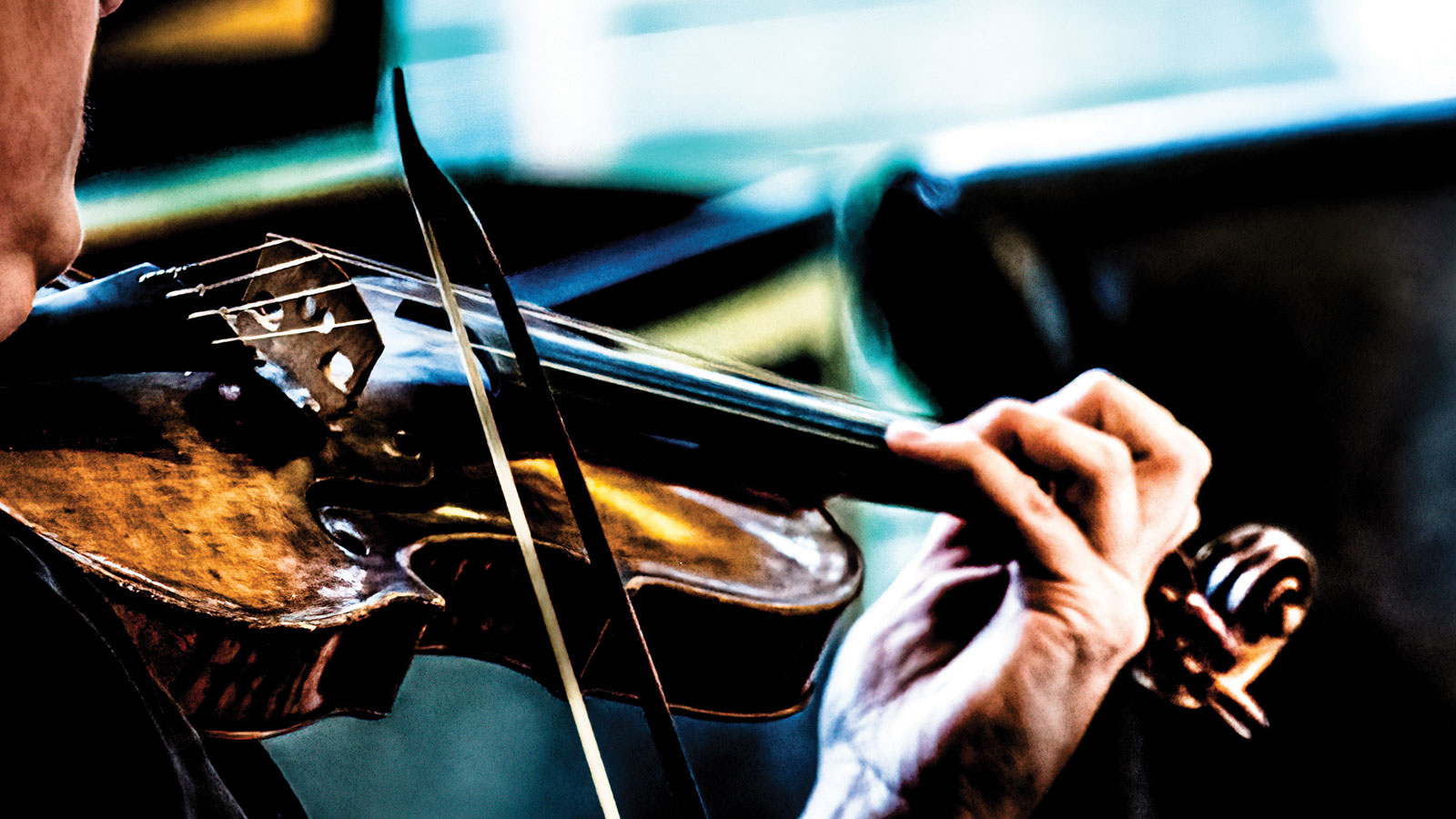
For Cunningham, that connection is intimate and collaborative. It’s what drew her to chamber music and what motivates her to continue the hard work of getting to the moment where she steps on stage and draws her bow across the strings, ready to bring the Baroque experience to life. 4
For more information on the Whidbey Island Music Festival, visit whidbeyislandmusicfestival.org.