A Radical Idea—Buy Local
by Charlotte Bear
It never ceases to amaze me—the effect a single person can have by making one simple change. What if I told you, starting today, you could have a quantifiable impact on issues like soil health, air quality, clean water, food waste, plastic use, human health, animal welfare—and the list goes on. In a brave new world of chronic inflammation, climate intensification, and economic inflation, there is no doubt things are heating up, and it seems we have reached a fever pitch. So, what can we do about it?
We cast our votes, we rally, we spread the word. Sometimes it doesn’t feel like anything has budged an inch. Yet, there is actually a physical entity that intrinsically binds a human being in body, mind, and spirit with the planet itself. It’s called food. As a functional nutritionist, I’ve come to learn that if humans could just eat soil, we would receive all the nutrition we need. But, as we are not earthworms, we rely on plants and animals—including those of the micro variety—to process and synthesize these molecules into a form that sustains life in us. The way we engage with this sacred relationship determines what comes next.
So, are you ready to get radical? It only takes one simple change—where you buy your groceries. You don’t have to make a complete life change overnight. You do not have to overhaul your kitchen or invest thousands of dollars in chicken coops and garden beds. I do encourage you to start moving in this direction, surely and sustainably—but start small. Be intentional about the next choice you make. Know every dollar you spend is a vote for the earth we want to see. Where stewardship of a healthy planet is as simple and elegant as a cow grazing in a meadow.

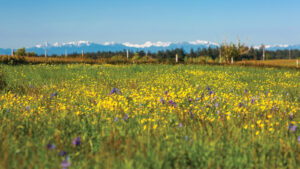
Look around you, from Washington State Route 525 we can spot livestock, orchards, vineyards, beehives, farmland, beaches, ocean, forests, and bogs. The island is a cornucopia of food. Egg yolks in the deepest hue of gold; greens, glossy and vibrant; meat, tender and rosy; fish, fresh as the sea breeze; mushrooms, pure and full of the flavor of the forest; and fruit bursting with sweetness if you’re willing to wait for it to ripen. Much of this food is homegrown, cultivated on the family homesteads we see from the main roads, or the hidden gems found at the end of concealed driveways—but much of it is readily available to you.
As a conscientious consumer, there are many ways to tap into our thriving local food system here on Whidbey Island. You can go straight to the source by buying from your farming neighbors, frequenting farm stands, and shopping at the farmers markets. Many producers also offer meat and veggie Community Supported Agriculture programs (CSAs) which yield a plentiful bounty for a reasonable price. You can usually find a selection of local choices at some of our grocery stores and food banks, as well as numerous options through the Whidbey Island Grown Cooperative Food Hub. Focus on foods “processed” in gardens and kitchens, rather than factories.
Let’s face it, no matter where you look, groceries are expensive, and we’re seeing the prices continue to rise. Why not take that money and invest it in farmers and farming practices that rebuild our soil, sequester carbon, respect our animals, and circulate resources within our local economy? Invest in real food from this island—the place where we live and the home we love—and know it was grown in our own backyards.
I’ve been experimenting with the question, is it possible to eat 100 percent island-sourced? And the answer is, you can come pretty darn close. Let’s see if we can bridge that gap. So, I invite you to follow along in the upcoming issues of Whidbey Life Magazine as I share my experience shopping locally and building delicious recipes that will nourish your soul and support your community. I have a radical idea, and it all starts with buying local.
Charlotte Bear, MS, CN, is a Whidbey Island nutritionist as well as a home chef, culinary instructor, homesteader, and healthy-living expert. Join her in future issues of the magazine for the Locally Sourced series, as she explores the local food landscape, develops flavorful recipes inspired by Whidbey, and discovers the ways in which coming together over food can promote mindfulness, health, and community.