The Artistry of Greg Thomas
by Lea Cramer • photos by Jamie Conners
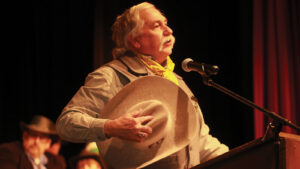
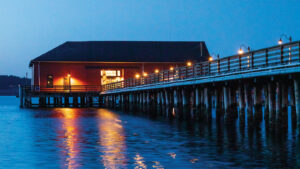
Sunlight floods a warm, tidy studio overlooking Mutiny Bay, the air humming with creativity. Here, Greg Thomas—an accomplished woodcarver, painter, and photographer—focuses his wild imagination on fascinating works of art. He embodies the spirit of Whidbey Island, where nature is both muse and collaborator. Through whimsical carvings, intricate paintings, and captivating photographs, Greg uncovers the hidden stories and changing perspectives within the world and ourselves.
He once envisioned himself as an art teacher, dedicating years to earning a degree in art education from the University of Washington. Yet, despite his formal qualifications, Greg never found himself teaching within a traditional classroom setting. Instead, his artistic process has been about seeing the world in the detail others might miss and then expressing that through his work. “I have this insatiable need to create and design,” Greg said, as if the act of creation were a force he couldn’t resist. For Greg, it is never about the finished piece but the process itself—the slow, deliberate unfolding of an idea. His work, in many ways, is a lesson: creativity, like life, often takes unexpected turns.
Early on, Greg dabbled in furniture making. His first substantial piece was an armoire for his late wife. They couldn’t afford the high-end bespoke cabinetry she had her eye on. He had an inkling he might be able to replicate something similar though, and $225 and a few weeks later, Greg gifted his wife a handmade, hand-painted wardrobe that is still in use nearly 50 years later. “I worked selling pipe valves and fittings. I made that dresser from the dunnage,” said Greg, pointing to another piece of furniture made from the waste wood packaging material. It’s a stunning piece of craftsmanship, showcasing Greg’s scrupulous eye for detail. Over his career, he has crafted twenty to thirty pieces of furniture from upcycled, recycled, and reclaimed materials.
A glimpse into the mind of this woodcarver reveals focus, patience, precision, and artistic vision—he has the uncanny ability to reveal the hidden figure within the wood
In his retirement, Greg has transitioned from furniture to figurines. Carving tools neatly line the workbench like a platoon reporting for duty. A Christmas figurine, carved initially as a gift for a family member, has become one of Greg’s most requested signature designs. Whether a delicate woodland creature or a timeless keepsake, each piece carries a bit of Greg whittled into every curve and fine detail.
A glimpse into the mind of this woodcarver reveals focus, patience, precision, and artistic vision—he has the uncanny ability to reveal the hidden figure within the wood, balancing technical knowledge and tool control with an intuitive grasp of grain, density, and expression. Mistakes become part of the process, leading to unexpected creative problem-solving and adaptation. It’s a meditative experience—a dance between control and surrender, where every carving tells a story shaped by the artist and the wood itself. “Wood tells you what it wants to be,” Greg said, turning over a partially carved block of wood. “I just bring it to life.” If that is indeed true, Greg’s wood has a sense of humor. Most of his figures are playful, reflecting his good-natured personality. It’s as if his pieces burst with joy.


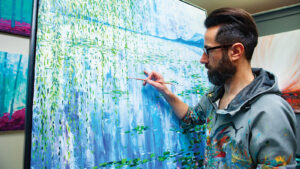
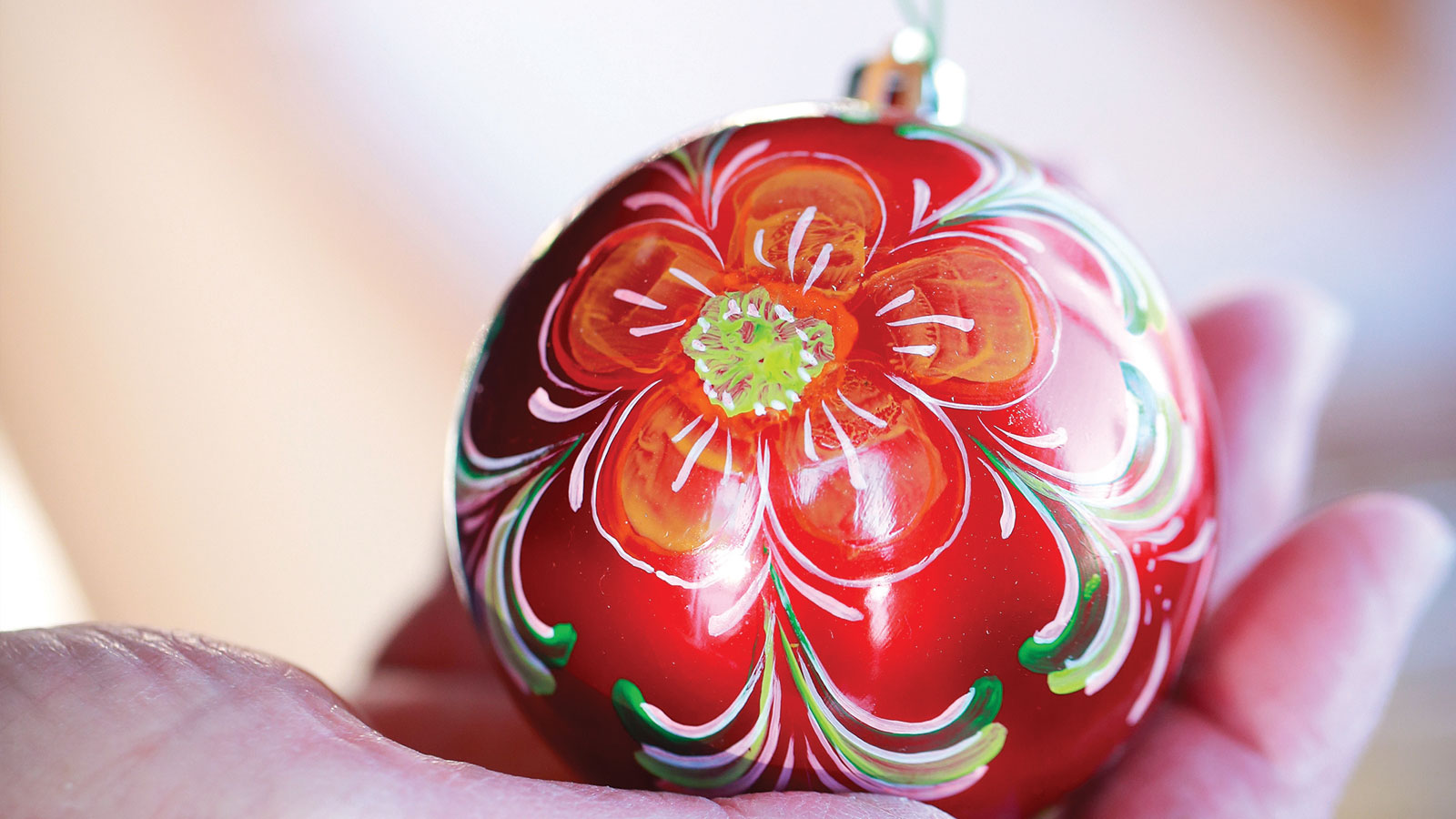
When Greg’s fingers ache from holding the chisel too long, he merely slides down his workbench to his painting station. These days, he primarily enjoys Rosemaling—the Scandinavian folk art painting technique characterized by distinctly shaped brushstrokes, ornate stylized scrolls, and floral motifs in vibrant colors. Besides the eye-catching designs, Rosemaling fosters connection, both in celebrating nature’s beauty and honoring the history and cultural tradition of the craft.
His powers of observation also bleed over into other interests. Greg’s photography isn’t just about capturing images—it’s about preserving fleeting beauty and quiet stories. Whether it’s a lone seagull against a stormy sky or the dappled light filtering through ancient cedars, he seeks out unnoticed moments that might otherwise slip away.
For him, photography is more than a craft; it’s a way of seeing, of feeling. His lens finds raw, unfiltered glimpses of life. His macro photography invites viewers to pause and take in a bee plundering pollen, lichen clinging to a branch, or a flower petal unfurling. These intimate shots offer a deeper appreciation for life’s smallest wonders.
Greg is sharing his passions with the next generation. Before the COVID-19 pandemic, he taught youth carving classes through the Learning Lab, passing on his technical skills and philosophy of art. His students learned to wield chisels and mallets, but they also learned to see—to notice the potential in a rough piece of wood, to find inspiration in the natural world, and to trust their creative instincts. In these post-pandemic days, he has enjoyed teaching one-on-one in his studio and mentoring future artists.
Through all this, Greg embodies the quiet strength of Whidbey’s creative pulse. His work does more than capture a moment or showcase craftsmanship; it preserves a way of life, offering a window into the island’s culture. He channels the essence of the ordinary in every stroke and frame—those small, unremarkable moments that shape the larger tapestry of our shared existence.
He is one of many local artists who anchor the island’s identity, weaving a thread of continuity that connects art to the past, present, and future. Greg is a reminder that folk crafts are not lost but celebrated. By supporting artists like him, we sustain the heart of our communities, ensuring their creative legacy endures for generations to come.