

The World of Mushroom Farming
By Allyson Meyer • Photos by Dave Meyer
At the end of a quiet, rural road in Clinton sits an unassuming building—its corrugated metal exterior seeming to emerge from the green Whidbey forest that surrounds it. Here, within the industrial setting, mushroom farmer Caleb Schulte has carved out a passion for fungi that takes us back to nature.
“My favorite aspect of mushroom farming is the sheer diversity of types I grow. It’s thrilling to have a new type pop up and how unique each one can be,” he said.
Mushroom farming wasn’t always Schulte’s path though. “I came from the beautiful state of Colorado. Always enamored with the Pacific Northwest, it had long been in my mind as ‘someday.’ It’s a climate like no other in the rest of this lovely country and I could easily picture myself settling in comfortably,” he said. “When my mother and her wonderful husband moved to Whidbey, the universe seemed to align in just a way that presented me with such an opportunity.”
Out of this, Understory Mushrooms was born. “The inspiration for the name Understory Mushrooms came from one of my favorite aspects of living in the PNW; walking around in the damp forestscape and chancing upon amazing and unusual fungi. When you’re least expecting it, they seem to leap out and reward those who slow down enough to take in their surroundings. The understory is where all this occurs—the space encapsulated under the canopy of trees.”
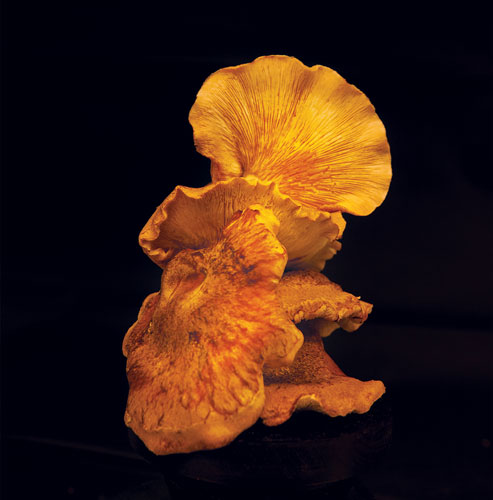 Shitake mushroom
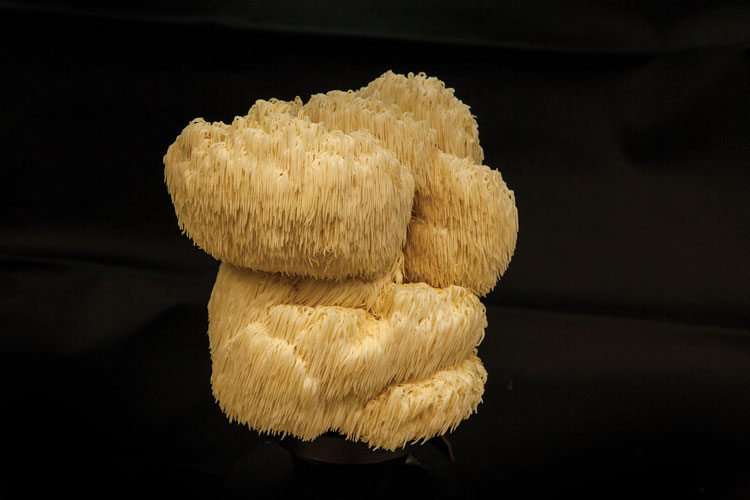 Lions Mane
Now, more than a year in on this business venture, Schulte has fully embraced this new mushroom life on his farm on South Whidbey.
It’s the earthy scent that first greets visitors when they walk into Schulte’s facility, a comforting and subdued fragrance that conjures up images of farmland, fertile soil, and getting one’s hands dirty. It’s humid and warm, with mushrooms at different growth stages—from early germination to ready for harvest. Schulte’s process starts with creating the perfect, sterile conditions for the mushrooms to grow, a process he’s learned through trial and error.
“One thing I would like people to know about mushrooms is that they have the ability to help us heal—ourselves, each other, and the planet.”
“The process I use for growing mushrooms is using bags to make basically a sterilized dirt and then introducing myceliated grain into these bags,” he explained. “Once the bags germinate for long enough, they become fully inoculated with mycelium, at which point I cut the bag open and introduce it into a high humidity light cycle room. That’s where the mushrooms pop up.”
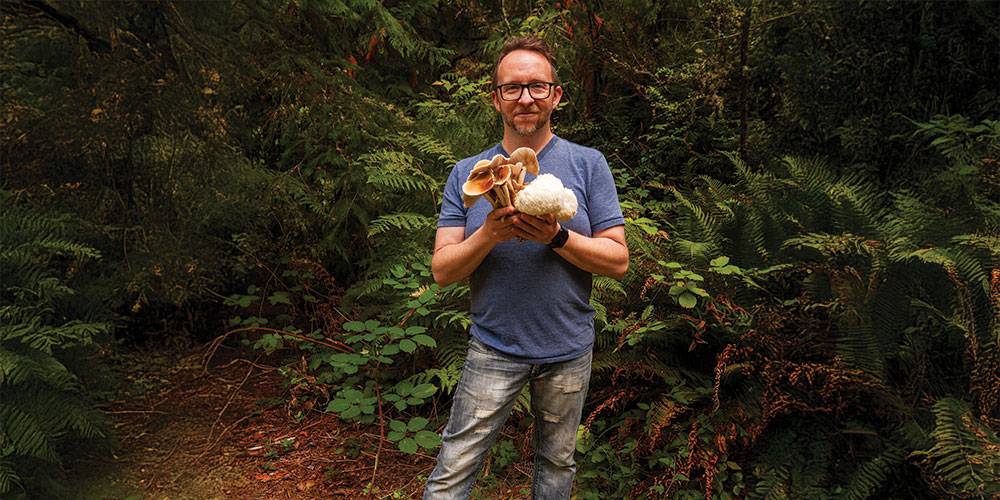
And from this process, beautiful fungi emerge, from the pink oyster mushroom to the iconic lion’s mane, which is front and center during our August visit. This mushroom variety lives up to the name, its long, white tendrils wildly escaping the containers in which it grows. It is otherworldly for sure, but for Schulte, there’s nothing as grounding.
“My favorite type of mushroom is probably the lion’s mane,” he admitted. “Not only is it delicious and versatile, but the health benefits of lion’s mane are astounding. It’s good for the brain, good for the gut, heart, inflammation—you name it.”
The positive health impacts alone would be enough to add these mushrooms to your diet, but Schulte is quick to point out the other benefits of these versatile fungi. “Mushrooms mean a lot of different things to me. They’re more sustainable, [they’re] a good protein source that doesn’t come from animals, and, above all else, they are a means for us to heal,” he said. “One thing I would like people to know about mushrooms is that they have the ability to help us heal—ourselves, each other, and the planet. Mushroom farming helps the environment in a variety of ways. It is a very sustainable crop to grow, not taking too many resources and very little ground space. They also can help remediate contaminated soil and some types can even eat plastics. The more we learn about mushrooms, the greater their application for our well-being. They are complete proteins, which means they have all the essential amino acids that our body needs, making them a great substitute for red meat. And they can help connect us with each other through conversation.”
And that’s been Schulte’s focus since his first foray into the world of fungi, community—making connections at the farmers markets, sharing his produce with mushroom devotees or novices, or creating opportunities for conversation over this unique crop. “Understory Mushrooms was born from a promise to myself to become more sustainable, a desire to foster connection, and to embody a space that promotes community. I don’t hit the mark all the time, but I really do try my best to be a good human being and use those three things as my guideposts. Learning to grow mushrooms was really more like learning about myself. About what I’m capable of and what I want out of this life. It’s been a deeply personal journey. Mushrooms to me embody so many aspects that I feel are extremely important—they truly do have the power to guide us into healing,” he said. “I have a personal relationship with the mushrooms I grow—I put a lot of care into them. They have taught me a lot about myself and what it means to be connected and mindful. I look forward to all they have to teach me and hope to impart their wisdom onto as many others as I can.”
To learn more about Understory Mushrooms, you can follow Schulte’s journey on Instagram at @understory_mushrooms and purchase his mushrooms and products at local farmers markets and on the Whidbey Island Grown Cooperative (WIGC) Food Hub.


