

Eating Like a “Localvore”
By Charlotte Rose Bear, MS, CN
I was a vegetarian for more than six years after taking a food ethics class my first year of college. I’ll never forget leaving class, heading to lunch, ordering a veggie wrap, and vowing to never go back. Fast forward a few years and I found myself in a health spiral, brought on by a microbiome imbalance. That’s when I began to look into the science behind it.
My husband teaches nutrigenomics (nutrition + genetics) at our alma mater, the National University of Natural Medicine (NUNM) in Oregon. Looking over my genetics, it became evident I was inadequately processing certain B vitamins from plant-based foods. Luckily, we can store these vitamins in our bodies for about six years. Unfortunately for me, time had run out, my stores were empty, and my nervous system was struggling.
Knowing this data allowed me to accept that my genetics and microbiological climate made me a poor candidate for a plant-based diet. But it didn’t make me any less passionate about my reasons for pursuing vegetarianism. That’s when I turned to the concept of eating like a “localvore.”
A localvore sets a parameter around the miles their food travels before they eat it—particularly in the context of meat. Typically, the radius is 100 miles or less. On Whidbey, this might mean prioritizing island-raised meat; committing to meat raised in the Puget Sound region; and accepting Pacific Northwest grown, pasture-raised, grass-finished, organic meat.
There are numerous reasons to pursue a localvore diet with meat. It might surprise you how aligned some of these reasons are to common ideals of vegetarianism, such as environmental impact, human health, and animal welfare. Locally sourced meat supports a strong ecosystem, allowing for the sequestration of water, carbon, nutrients, plant life, and pollinators and making us more resilient to climate change. Free ranging herbivores actually contribute to the decline of greenhouse gases by helping pull carbon out of the air and incorporating it back into the soil. As a localvore, you can engage directly with your small-scale, local producers, learning about their practices and many times visiting their farms, where the animals live off the land and contribute to a regenerative environment. Meat grown in these conditions has a nearly medicinal-grade quality of nutrients in each serving—packed with vitamins, minerals, essential fats, and amino acids—while containing none of the inflammatory, hormone/antibiotic/pesticide-laden contaminates found in many conventional meats. In addition to a healthier food source, localvorism is also economically friendly. Buying and eating local food helps circulate resources within our community, supporting local farmers who in turn support us.
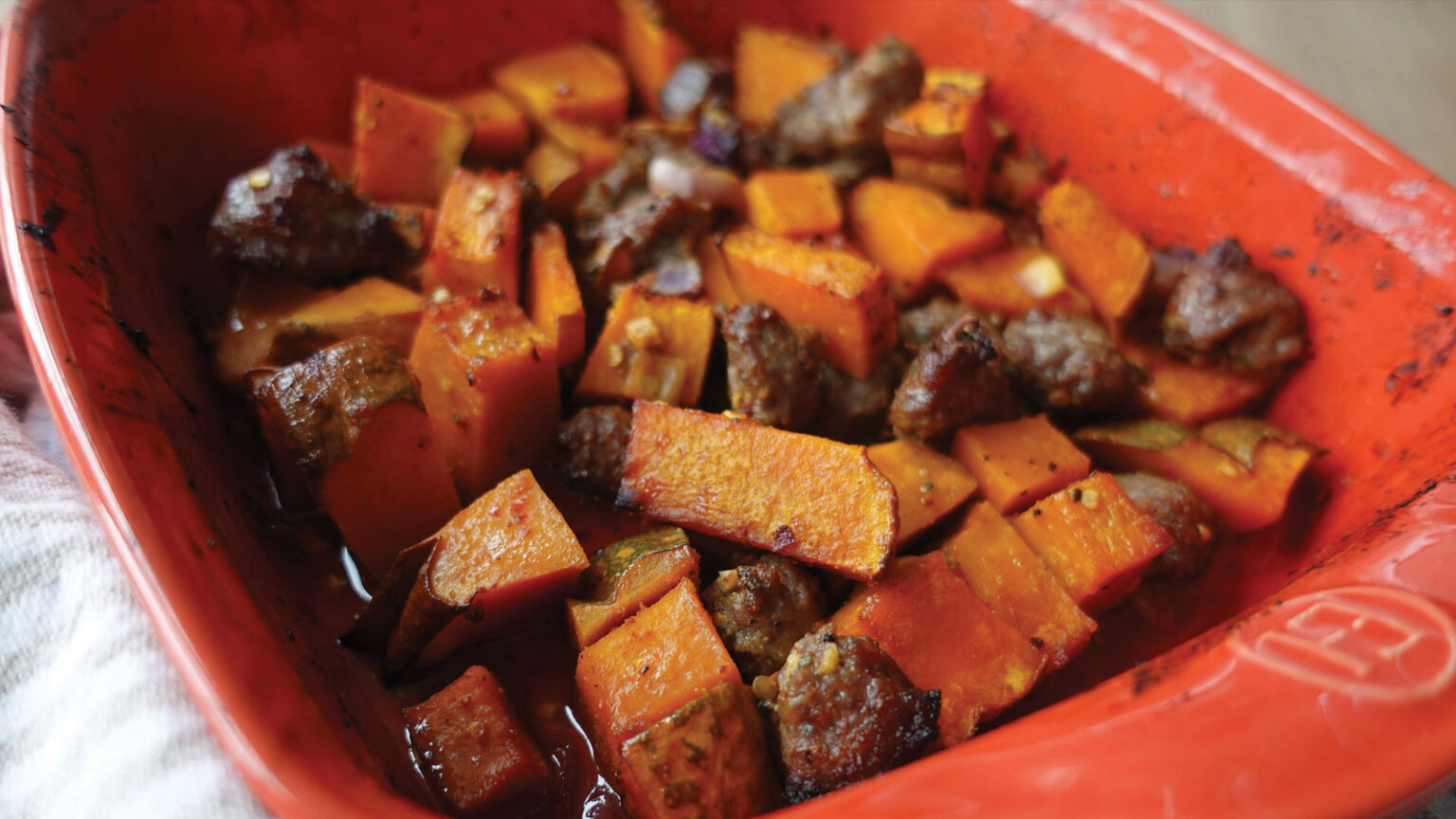
I’m inviting you to embrace a local mindset—knowing that your decision to source food locally is deeply impactful—and make a conscious commitment to support responsible island farmers. It all starts with exploring what’s out there. To celebrate the localvore diet, I’m sharing an island-inspired, Lamb and Kabocha Squash recipe, with ingredients sourced from 3 Sisters Market, the Organic Farm School, Glendale Shepherd, and the Whidbey Island Grown Cooperative Food Hub.
Thank you to all island producers for making this farm fresh meat and produce so readily available to us.
Charlotte Bear, MS, CN, is a Whidbey Island nutritionist as well as a home chef, culinary instructor, homesteader, and healthy-living expert. Join her in future issues of the magazine for the Locally Sourced series, as she explores the local food landscape, develops flavorful recipes inspired by Whidbey, and discovers the ways in which coming together over food can promote mindfulness, health, and community.


