

From Dream to Reality
by Sharon Heiber • Photography by Jamie Conners
On their 15-acre farm animal sanctuary in Clinton’s Maxwelton Valley, Sarah and Ansel Santosa are out to build a kinder world—reimagining our relationship with farm animals and keeping food waste out of the environment. They were teenage sweethearts in the suburbs of Minneapolis when they started envisioning their future together, which included living on a farm and having a child.
“We met on the first day of school, in our freshman English class. I fell in love with Ansel instantly,” Sarah said. “It took him a bit longer to reciprocate.”
“By the time we graduated, we had our daughter’s name picked out,” Ansel added. Together, Sarah and Ansel attended the University of Washington. They married and launched their careers in Seattle—Ansel working in technology, Sarah managing a bridal boutique—but they never lost sight of their teenage plans.
After a decade in Seattle, they began looking for somewhere to grow their family and establish a farm.
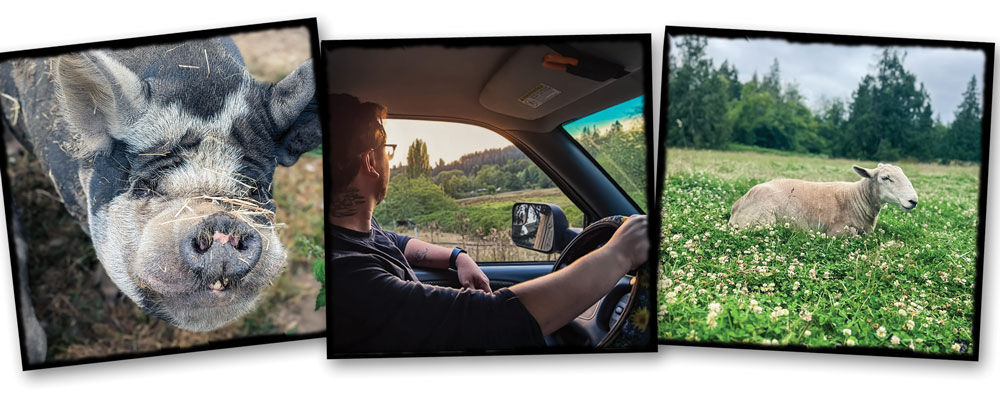
They started exploring areas within a two-hour radius of Seattle, at first focusing their search on Port Townsend. They hadn’t considered Whidbey Island until they visited and fell in love with the farm in Clinton that officially became their home in 2018. They named it Ballydídean, which means farm sanctuary in Irish, a nod to Sarah’s ancestry. Soon after, they adopted their daughter, Gwen.
The larger mission is to give people an opportunity to rethink their relationship with farmed animals by interacting with the animals they typically only meet on their dinner plate.
“We were lucky we landed here. Not only because it is a beautiful place to live and raise a child, but because South Whidbey has been so welcoming to us. Having that support from the community—not being worn down by people questioning what we are doing, as some sanctuaries are— allows us to put more energy into the work of caring for animals,” Sarah said.
The sanctuary started small—three chickens and two cats that came with the property—and grew quickly. In the early days, the Santosas said “yes” to every request. “Yes” to the pigs rescued by the sheriff from a neglect situation. “Yes” to the goats whose owners had tired of them. “Yes” to the “bummer lambs” rejected by ewes and bottle-fed by farmers. They learned about farming as they went, through hands-on experience and YouTube videos. Now, seven years later, there are around 160 animals at the sanctuary—including cows, llamas, alpacas, goats, sheep, pigs, turkeys, chickens, geese, and ducks—and the Santosas are no longer able to say “yes” to every request.
“It’s a trap some sanctuary founders fall into. They have the heart, but not the self-control,” Ansel said. “If we can’t guarantee a safe, permanent home for an animal, we won’t take them,” added Sarah. When they cannot accept an animal, they network with Cascadia Sanctuaries, a group of more than 50 trusted organizations with a similar mission.
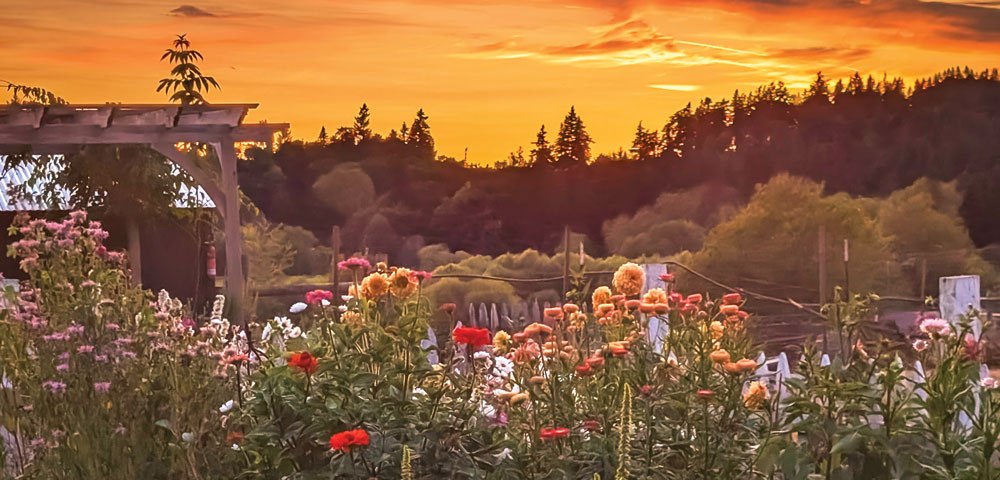
When you spend a few hours at the farm sanctuary, it’s easy to focus on a particular animal. There’s Blossom, the pig who is deaf and needs to be alerted at feeding time. Or Archie, the giant Holstein who prefers to spend his days alone. “Not a good natural survival instinct,” noted Ansel. But understanding the mission of Ballydídean is knowing it is more than the number of animal lives that are saved or improved. The larger mission is to give people an opportunity to rethink their relationship with farmed animals by interacting with the animals they typically only meet on their dinner plate.
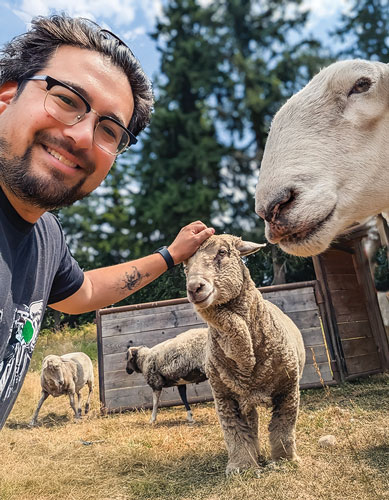
To accomplish this goal, a significant portion of the family’s time is spent in the community—at events, school presentations, nursing home visits—and hosting groups of children and teens at the farm. More than 1,000 people tour the farm each year, getting a hands-on experience that includes the popular option of hugging a cow or a lamb.
“While the effects of this outreach and engagement are difficult to measure, we believe living a life that reduces harm to animals is a spectrum, and we celebrate every incremental movement toward compassion,” Ansel said.
The couple has turned a high school vision into a lifelong pursuit, saving hundreds of animals, building a rich life for their daughter, and helping thousands of people get a better sense of where their food comes from. At this point, the Santosas say they have no desire to get bigger, only better: cleaner, stronger, more efficient—to make their farm sanctuary the best it can be.
“Seven years ago, I did not think this was what our lives or this farm would look like,” Sarah said. “It has not just met, it has exceeded our expectations. I look around and can’t believe how much life surrounds us.”
For information about the sanctuary and to learn about tour availability, visit ballydidean.farm.
New Partnership Reducing Food Waste
Each week, the Santosas feed approximately 2,000 pounds of surplus produce once destined for the landfill to their animals. Sarah, her father, and local teens— paid part-time staff members—pick up groceries from the Goose Community Grocer in Langley every day and the Clinton Market twice a week. The teens and volunteers sort the food, removing stickers and checking for spoilage, before distributing it to the animals—cows like apples, ducks like leafy greens, pigs eat anything. “The process is very labor intensive,” said Ansel. “But it’s allowed us to move all our ducks, chickens, pigs, and geese off grain entirely. And they are eating fruits and vegetables that would have gone to waste.” It’s a win-win-win— less food in the landfill, lower feed costs, and healthier diets for the animals.


