The Land’s Bounty
By Lea Cramer • Photos by Anne Abernathy
On Whidbey Island, preservation is not a theory. It is a roof that must be replaced before the rains return, a hinge welded back into obedience, a hayloft stacked against winter. At Eckholm Farm, nestled inside Ebey’s Landing National Historical Reserve, history isn’t just scenery—it’s woven into the daily workload.
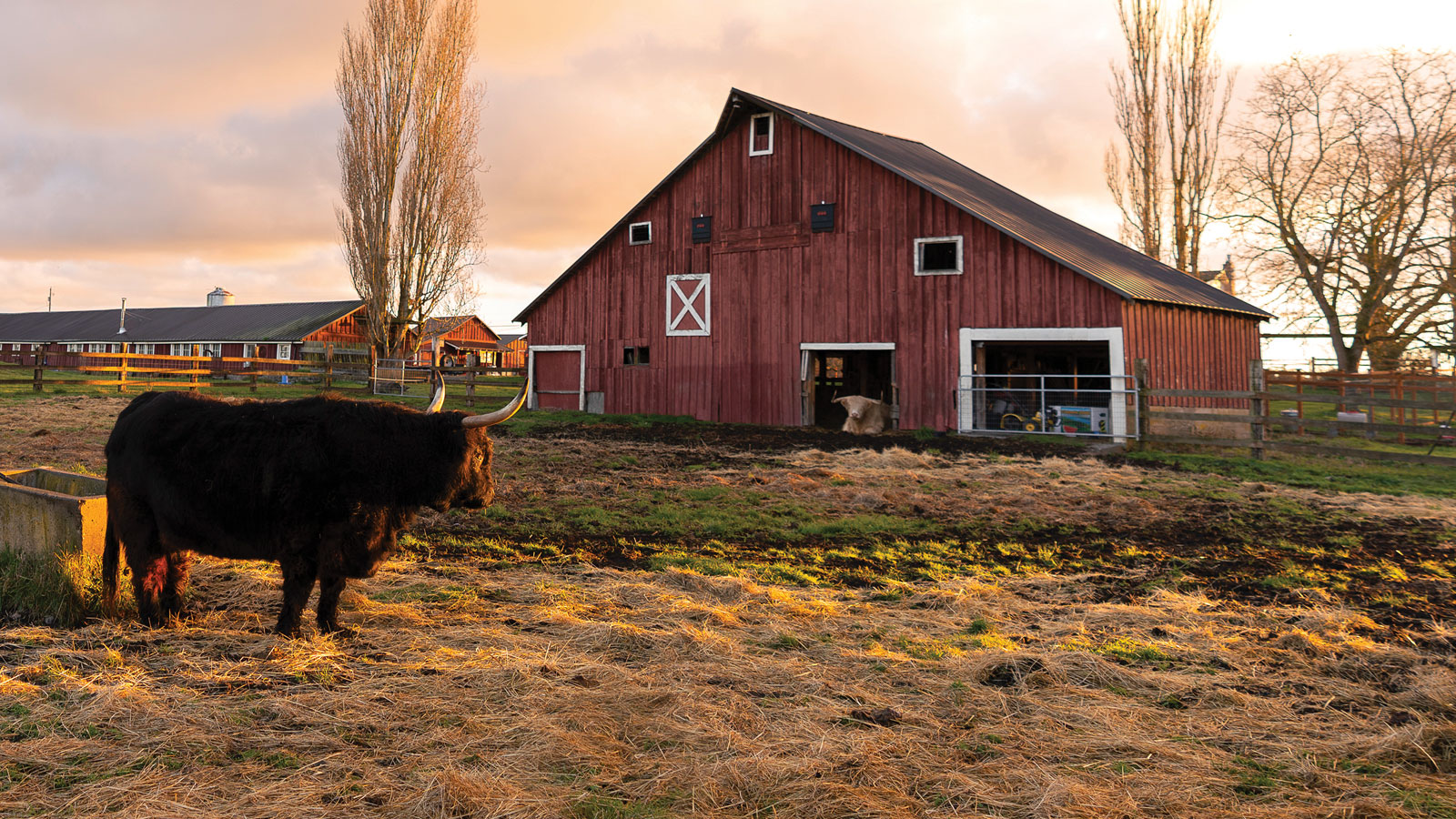
One of the farm’s heritage barns—registered with the state—still stores hay in its loft, as it was built to do. The beams hold. The bales are stacked. Here, the past is earning rent.
“We bought this farm in 2013,” Bruce Eckholm smiled, “and fell in love with the project of seeing if we could restore it. So, it did not look like this when we bought it.”
Restoring it did not mean freezing it in time. It meant making it useful and productive again. The decision was not reckless, though it might have looked that way from the outside. Linda Eckholm, Bruce’s wife, still works as an actuary—a profession defined by risk assessment and probability curves. Insurance, steady income, health
On Whidbey Island, preservation is not a theory. It is a roof that must be replaced before the rains return, a hinge welded back into obedience, a hayloft stacked against winter. At Eckholm Farm, nestled inside Ebey’s Landing National Historical Reserve, history isn’t just scenery—it’s woven into the daily workload.
One of the farm’s heritage barns—registered with the state—still stores hay in its loft, as it was built to do. The beams hold. The bales are stacked. Here, the past is earning rent.
“We bought this farm in 2013,” Bruce Eckholm smiled, “and fell in love with the project of seeing if we could restore it. So, it did not look like this when we bought it.”
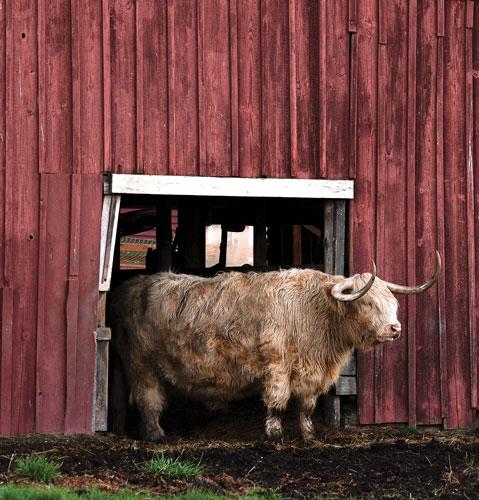 One of the farm’s Highland cattle outside the property’s heritage barn.
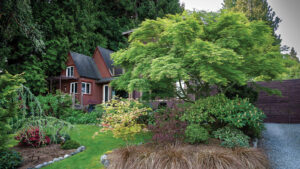
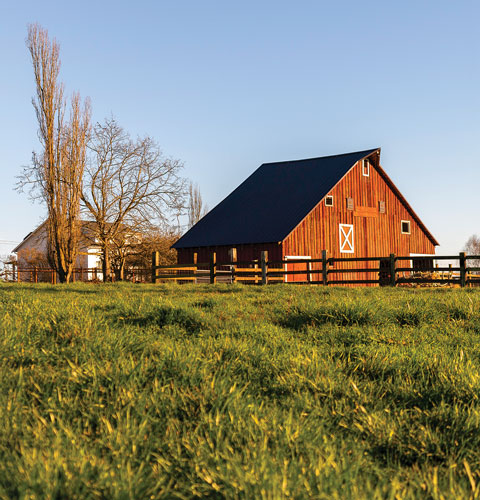 One of the heritage barns on the picturesque property of Eckholm farm.
Restoring it did not mean freezing it in time. It meant making it useful and productive again. The decision was not reckless, though it might have looked that way from the outside. Linda Eckholm, Bruce’s wife, still works as an actuary—a profession defined by risk assessment and probability curves. Insurance, steady income, health coverage: the quiet scaffolding that allows a beekeeper to pursue a calling that does not promise consistency. She is close to retirement now, but for more than a decade, she has underwritten the farm in ways no grant ever could.
People come to Ebey’s Landing for the sweep of prairie
and tidy barns, for the sense that some places stay the same.
Bruce refers to beekeeping as “a hobby that got kind of out of control.” The “hobby” led an IT guy to graduate school, then a Ph.D. in entomology, followed by time spent at the USDA bee lab in Tucson, where everyone in the building talked about bees all day long. It might have stayed there—air-conditioned, grant-funded, and contained. Instead, he brought it all back to Whidbey.
The farm may celebrate its history, but there’s nothing old-fashioned about its honey. Bruce runs three apiary sites across the island. “I keep the honey from each of these apiaries separate,” he said. “Then I take samples and send them to a lab. They identify the plant species and every year I print that data on the label.”
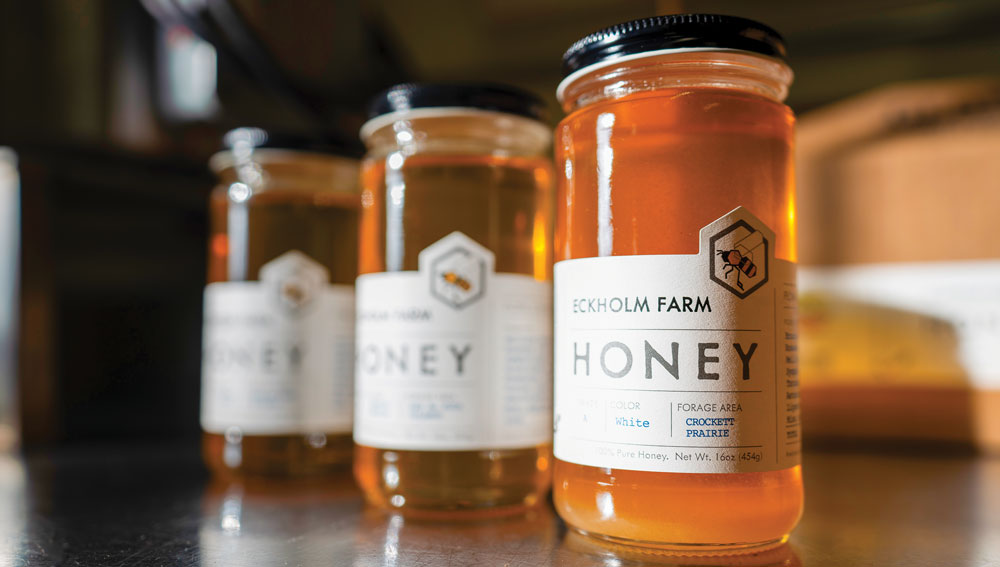
These are no ordinary labels. The jar is not branding, it is documentation. In addition to noting the grade and color, it lists the forage area and the floral composition, expressed as percentages. In a good year, the hives produce nearly 1,500 pounds of honey—almost a ton. Too much to call a hobby, too little for an industrial scale. It’s a “side hustle” that grew and has given Bruce unique insight into the agricultural nuances of Ebey’s Landing.
Whidbey is not an easy place for bees. “This is a hard place to keep bees because we have such a compressed season here,” he said. Colonies build slowly through spring. By the time they reach full strength, much of the early bloom has already passed. August comes quickly, and the harvest cannot wait. The work between those points is detailed and repetitive. Varroa destructor, the parasitic mite that has defined modern beekeeping and threatens hives, requires constant monitoring. “Queens aren’t lasting as long as they used to.” No single explanation satisfies—nutrition, stress, shifting forage? The data trail runs forward, not backward.
Extraction day appears both mechanical and intimate. Frames are uncapped, spun in a centrifugal extractor, and the honey runs into a clarifying tank where the wax rises and the liquid settles. It is gently warmed until it flows, then bottled by hand. Labels are applied one by one.
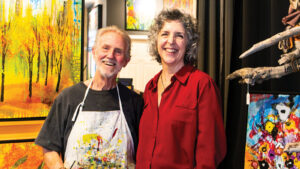
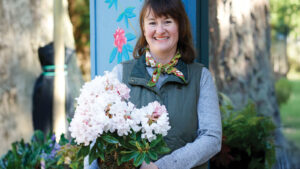
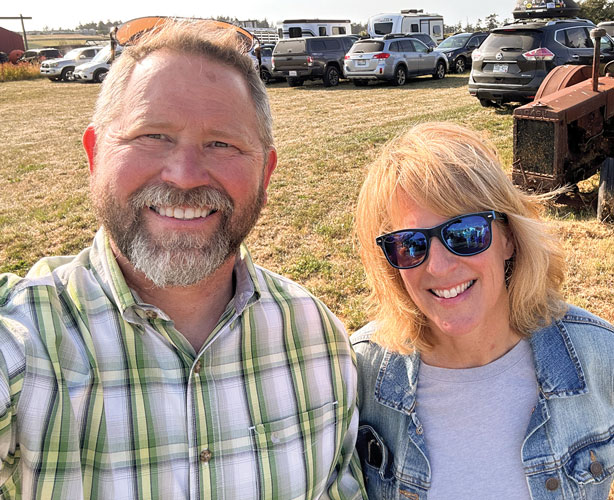 Bruce Eckholm with his wife Linda.
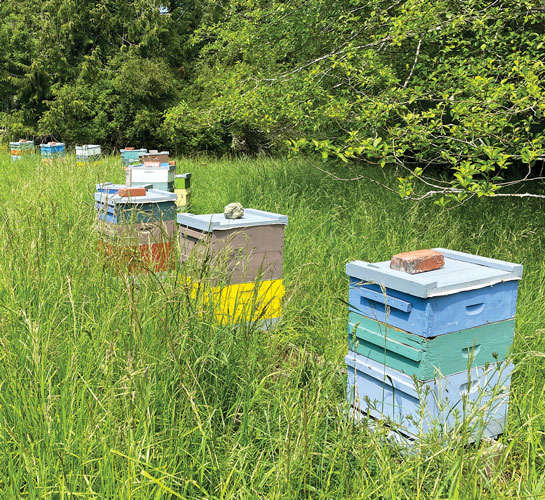 Eckholm Farm bee hives at one of three apiary sites across the island.
Over more than a decade of pollen analysis, Bruce has noticed something he did not expect. “The honeys are converging,” he said. Distinct profiles from different apiaries—once formed by snowberry or diverse prairie forage—are drifting toward similar patterns of mustard and clover. “It may suggest changes in climate or land use, which is a bummer because they were so wildly different.”
The scientist measures the chemical and botanical composition with patient precision; the farmer absorbs it, as one inhales the distant smoke of a wildfire—felt, but not controllable. Neither can correct it.
While Linda gazes at her computer, Bruce moves among Highland cattle, repairs fences, prunes the orchard, tends the bee yard, and stacks hay as if every gesture were a hedge against uncertainty. The Eckholms’ life is not a fairy tale of self-sufficiency but a negotiated partnership, a daily calculation in two currencies: the precision of spreadsheets and the patient, intangible currency of pollen.
In the heritage barn, hay waits in its loft the way it has for
more than a century—cut, dried, stacked, practical.
The farm’s contribution to Whidbey’s food ecosystem is incremental and visible if you follow the trail. A bale of hay from the heritage barn ends up feeding neighboring livestock. A jar of honey moves through the Whidbey Island Grown Cooperative Food Hub, or onto shelves at island stores and in bulk at a few Whidbey restaurants. Bees from Crockett Prairie forage in the backyard gardens of owners who may never know the hive’s location. Wax becomes candles. Orchard fruit travels to local restaurants. The ecosystem is not theoretical; it is wildly interconnected.
People come to Ebey’s Landing for the sweep of prairie and tidy barns, for the sense that some places stay the same. What they don’t see is the arithmetic of survival.
By December, the hives are sealed tight against the wind. Inside, thousands of bees cluster around their queen, vibrating to generate heat, living on what they stored in August. On an unseasonably warm afternoon, a few lift off, circle, and drop back through the entrance slit. February is still a long way from the blush of spring’s bloom.
Bruce can quantify mite loads and pollen percentages. He can tell you how many pounds of liquid gold were produced at each apiary last August. What he cannot calculate is whether snowberry will reassert itself, or whether next year’s labels will look even more alike as the botanical compositions on Whidbey Island become less diverse.
In the heritage barn, hay waits in its loft the way it has for more than a century—cut, dried, stacked, practical. Outside, bees will work with whatever blossoms. When a honey jar appears on a shelf, it looks simple. Clear. Assured. It does not mention climate drift or the combat against the deadly Varroa. It is, however, a direct reflection on the land’s bounty for the year, with the help of its meticulous stewards and the farmers who call the island home.