The Art of Expanding the Story
By Hailey Way • Photos by Michael StadlER
Picture this—you’re walking through a pasture where a large circus tent beckons you inside, offering shade from the summer sun. A group of visitors mingle with ease, anticipating the performance ahead. You grab a savory snack and peruse your program, which includes a thoughtful survey inviting you to reflect on the work you’re about to see. And, just when you think Island Shakespeare Festival (ISF) has anticipated every detail of the outdoor theatre experience, there are blankets, seat cushions, and umbrellas at the ready. On Whidbey Island, preparation is part of the ritual—summer weather demands it.
Behind the scenes, that level of care extends to the artists themselves. After an intensive casting process, the team at ISF brings actors into what they call “island life,” as South Whidbey becomes home for the duration of the season. The festival runs for roughly two months, from mid-July through the end of August, but the groundwork is laid long before opening night.
For Executive Artistic Director Olena Hodges, that begins with intention. “Our audition process is pretty unique,” she said. “The feedback I’ve received from actors is that it’s humane, which is very rare in the theatre world. From the beginning, we’re cultivating the framework of an inclusive culture.”
Picture this—you’re walking through a pasture where a large circus tent beckons you inside, offering shade from the summer sun. A group of visitors mingle with ease, anticipating the performance ahead. You grab a savory snack and peruse your program, which includes a thoughtful survey inviting you to reflect on the work you’re about to see. And, just when you think Island Shakespeare Festival (ISF) has anticipated every detail of the outdoor theatre experience, there are blankets, seat cushions, and umbrellas at the ready. On Whidbey Island, preparation is part of the ritual—summer weather demands it.
Behind the scenes, that level of care extends to the artists themselves. After an intensive casting process, the team at ISF brings actors into what they call “island life,” as South Whidbey becomes home for the duration of the season. The festival runs for roughly two months, from mid-July through the end of August, but the groundwork is laid long before opening night.
“Our audition process is pretty unique,” she said. “The feedback I’ve received from actors is that it’s humane, which is very rare in the theatre world. From the beginning, we’re cultivating the framework of an inclusive culture.”
For Executive Artistic Director Olena Hodges, that begins with intention. “Our audition process is pretty unique,” she said. “The feedback I’ve received from actors is that it’s humane, which is very rare in the theatre world. From the beginning, we’re cultivating the framework of an inclusive culture.”
That ethos is not new. Since its founding, ISF has operated on a pay-what-you-will model, removing financial barriers that have historically kept classical theatre out of reach. For centuries, these works were reserved for elite audiences. This model challenges that by making theatre accessible across economic lines. At ISF, this extends beyond ticket pricing. It is also structural.
“Theatre is so collaborative, but traditionally hierarchical,” Hodges explained. “To some degree you need structure, but I’ve been given a lot of room to explore different leadership models. It lends itself to a field where you can experiment with less hierarchical ways of working.”
That approach has drawn actors from across the country for the opportunity to perform, making ISF a sought-after destination. “[Many times], the reason artists became artists gets lost,” Hodges added. “We really try to let artists be artists.”
This philosophy is perhaps most visible in ISF’s evolving programming—particularly through its partnership with Hedgepig Ensemble Theatre’s Expand the Canon. The initiative focuses on bringing works by women and underrepresented genders back into the theatrical conversation, expanding what audiences recognize as part of the canon.
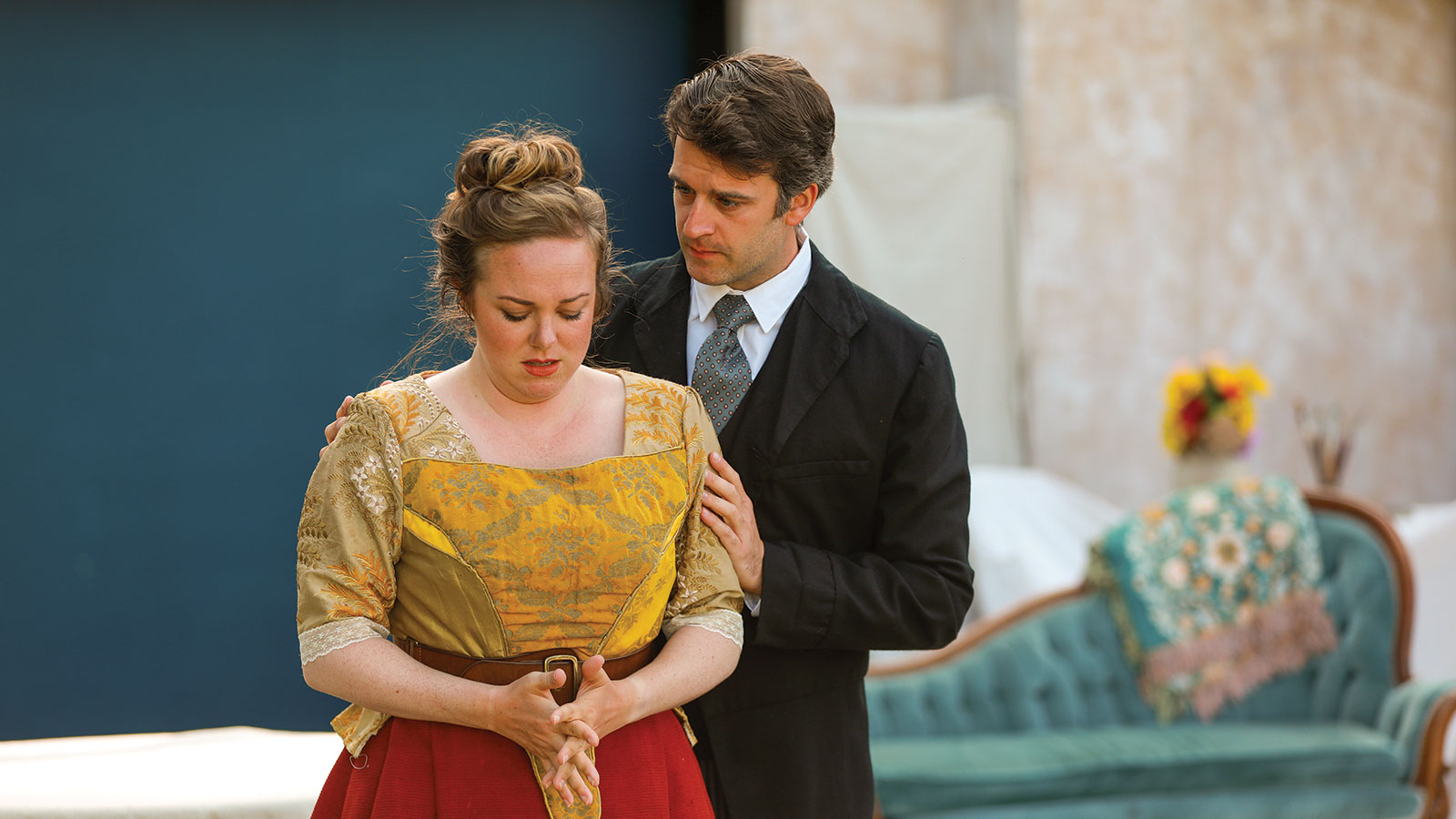
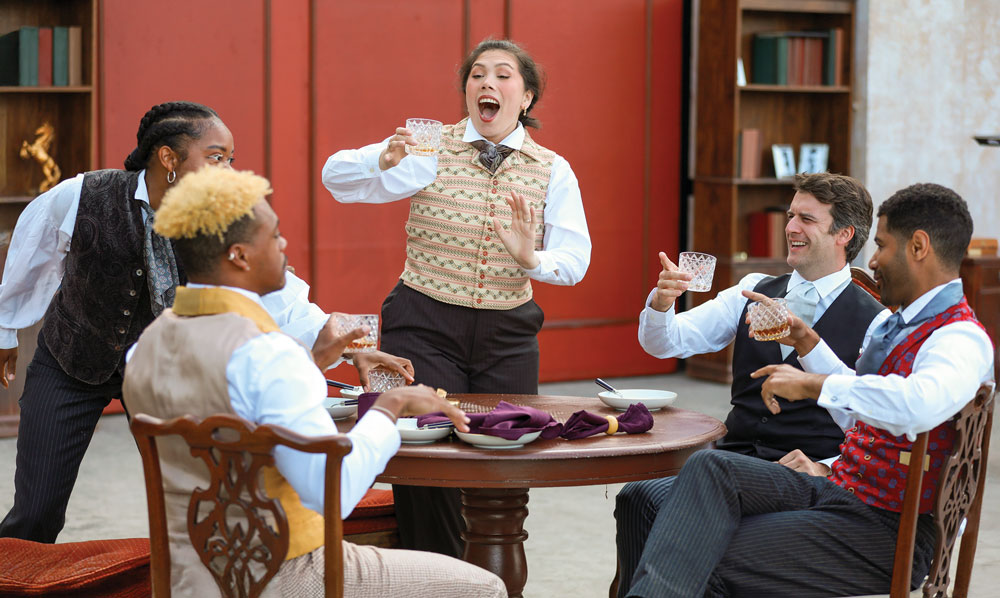
Last season, this included pairing Shakespeare’s Much Ado About Nothing with a lesser-known work, Anima (Her Soul) by feminist playwright Amelia Pincherle Rosselli. While Much Ado delivered a familiar narrative, staged with a nostalgic nod to 1990s California, Anima offered something more contemplative. Its inclusion marked a deliberate shift in how ISF defines “classical.”
To be clear, ISF is not abandoning Shakespeare’s tales. It’s never been limited to just the Bard, with the company historically including at least one non-Shakespeare work in its programming. What is changing is the scope of inclusion.
“It really raises the question of what the audience needs,” said Director of Artistic Programs Erin Murray. “If we’re producing plays that aren’t widely known, it doesn’t mean they shouldn’t be produced. It means we need to provide context so audiences can fully engage with them.”
ISF began its partnership with Expand the Canon in 2023, drawing from a catalog of overlooked works and bringing them to the stage. Hedgepig Ensemble Theatre’s mission to examine classical theatre through a feminist lens aligned naturally with ISF’s own values of intersectional inclusion, and this shift did not happen in a vacuum. The broader cultural reckoning of 2020 pushed many theatre companies to reexamine long-held assumptions about whose stories were being told and why. For ISF, it became an opportunity to evolve.
“I think fear and scarcity have crept into American theatre,” Murray said. “Especially when companies pigeonhole themselves into one category. We’re not just presenting preserved works. We’re asking what makes a script ‘classic,’ who gets to write those scripts, and how we define that word now.”
To be clear, ISF is not abandoning Shakespeare’s tales. It’s never been limited to just the Bard, with the company historically including at least one non-Shakespeare work in its programming. What is changing is the scope of inclusion. With Expand the Canon, ISF is taking on the challenge of redefining what belongs on a classical stage—embracing unfamiliar narratives, confronting difficult themes, and trusting audiences to engage with both. This 2026 season continues this trajectory. Alongside Shakespeare’s Macbeth, ISF presents a reimagining of Robin Hood of Sherwood Forest, directed by Murray.
“There are men in positions of great power,” she said. “That’s central to the Robin Hood story. He’s anti-oppression and critical of class distinction. Exploring that through a different lens, including gender expression, has definitely been influenced by Expand the Canon.” While many remember Robin Hood as a singular folk hero, Murray is interested in something deeper.
“The individualism of Robin Hood has been lost over time,” she explained. “I want to bring his story back into focus. It’s a new adaptation, but you’ll be familiar with it. Community has always been part of his heroism. With the backdrop of Whidbey Island, it’s sort of perfect to call it Robin Hood of Sherwood Forest.”
At its core, ISF’s work is a balancing act. It honors the familiarity of Shakespeare while making space for other stories. It challenges audiences, invites curiosity, and encourages introspection. The partnership with Expand the Canon does not replace tradition. It broadens it. And in doing so, ISF is not just presenting theatre each year, it’s reshaping how we engage with art in a more nuanced way.